If you have ever wondered whether your two lifting sessions a week are actually doing anything for your long term health, a major new study just gave you the most specific answer exercise science has produced in years. The short version: 90 to 120 minutes of resistance training per week appears to be the sweet spot for longevity.
The research, published in June 2026 in the British Journal of Sports Medicine and picked up by Harvard Health in July, tracked 147,374 adults across three major studies for up to 30 years. Participants who logged between 90 and 120 minutes of strength training each week were 13% less likely to die from any cause than those who did none. They also carried a 19% lower risk of death from cardiovascular disease and a 27% lower risk of dying from neurological diseases like dementia. Those are not small numbers.
The Study That Actually Put a Number On It
What makes this research stand out is the size and duration. Most exercise studies run for a few months, involve a few hundred participants, and get cited far beyond what their data supports. This one followed nearly 150,000 people for three decades, tracking exercise habits every two years, with enough variation to reveal a genuine dose-response relationship that shorter studies cannot capture.
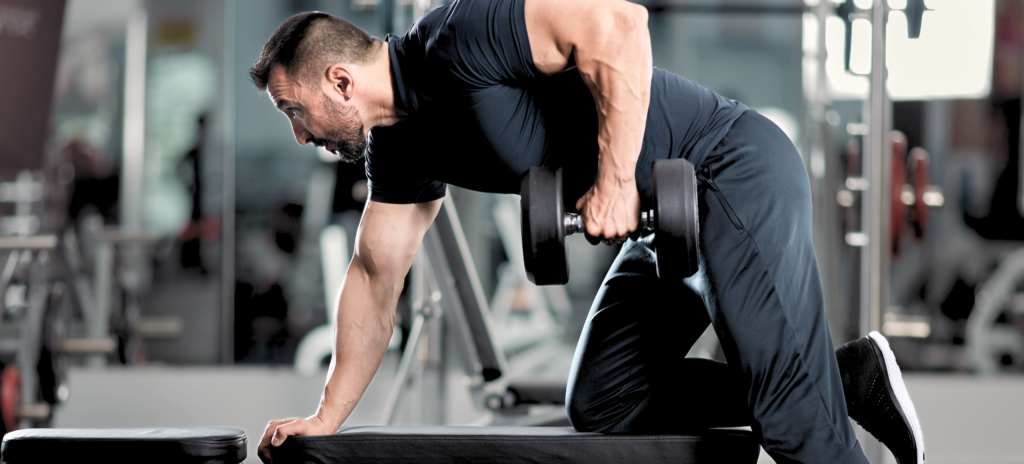
The 90 to 120 minute weekly range included any form of resistance training: free weights, machines, bodyweight movements like squats and push-ups, and resistance bands. Two 45-minute sessions a week get you there. Three 30-minute sessions do too. The path matters less than the destination.
When 90 Minutes Becomes Hard to Reach
The bigger issue for most athletes we see in Milpitas, CA is not motivation. Ninety minutes spread across a week is achievable. It is consistency being derailed by injury, or chronic load that never quite gets addressed, that eats into that target.
A hamstring that feels off becomes the reason you stop deadlifting for three months. A shoulder that gets grumpy becomes the reason you modify your bench press and lose your gains. A knee that aches becomes the reason leg day gets dropped. And just like that, those 90 minutes disappear.
The Real Advantage of Combining Strength and Cardio
The study did not stop at strength training in isolation. When researchers looked at people who combined high levels of aerobic activity with 60 to 119 minutes of resistance training each week, the risk of dying during the study period dropped by up to 45% compared with those who did minimal exercise of either type. Forty-five percent. That combination is where the data gets genuinely compelling.
For most of our athletes, this is not surprising so much as validating. The question is rarely whether to do both, but how to structure them so each supports the other. The dose that helps a 55-year-old masters triathlete in the Bay Area is not the same dose that helps a 29-year-old recreational lifter, and neither should be guessing at it.
More Is Not Always More
Going above 120 minutes of strength training per week did not produce additional reductions in all cause mortality risk in this study. The gains plateau. That is not a reason to scale back if you are training for performance, but it is a meaningful calibration for anyone who assumes more volume always equals better outcomes.
There is a real difference between training volume that builds capacity and volume that simply accumulates fatigue. More sessions and heavier loads can drive adaptation in the short term. Over years, that same pattern without thoughtful management is a reliable path toward overuse injuries: tendinopathies, stress reactions, and the kind of chronic stiffness that never fully resolves on its own.
Time in the Gym Is Not the Same as Training Stimulus
Here is something the study could not measure: whether those 90 to 120 minutes were actually hard enough to matter. Duration tells you how long someone was in the room. It does not tell you whether they gave their muscles a reason to adapt.
The mechanism behind strength training’s longevity benefits is not mysterious. Resistance exercise creates mechanical tension in muscle and connective tissue, which signals the body to build more of what it needs: muscle mass, tendon stiffness, bone density, and the metabolic machinery that keeps cardiovascular and neurological disease at bay. But that signaling only happens if the load is sufficient. Lifting the same weight you lifted three years ago, for the same reps, at the same perceived effort, is not really strength training anymore. It is movement with good intentions.
This is where progressive overload becomes the actual variable. The body adapts to the demands placed on it, and only those demands. If training does not progressively challenge what you are capable of, through added load, more reps, shorter rest, or more complex movement patterns, the stimulus stagnates and so do the results. Too little intensity and you are not generating the signal needed for adaptation. Too much, too fast, and you are accumulating damage faster than you can recover, which is how overuse injuries develop. The right dose sits between those two, and it shifts with your training age, recovery capacity, what is happening outside the gym, and the specific tissues you are trying to develop.
What This Means If You Are Already an Athlete
If you train consistently, this research is less about convincing you to lift and more about reinforcing why protecting your ability to do so over decades matters more than any single training block. You cannot bank longevity benefits from ages 30 to 40 if a preventable injury benches you from 40 to 50.
That is the frame we use at R3 Athletic and Physical Therapy. The goal is not just getting you back from injury. It is making sure your tissues and movement quality can support the kind of long term training load this research says is worth pursuing. We combine hands on manual therapy with progressive loading, and when tissues need more than standard PT can deliver, we bring in regenerative tools: shockwave therapy for tendons and stubborn soft tissue, and EMTT (Extracorporeal Magnetotransduction Therapy) for stimulating repair at the cellular level. These are the tools we reach for when a chronic Achilles, a hip flexor that never resolves, or a rotator cuff issue has been limiting training for months.
How Physical Therapy Fits Into a Long Game
Physical therapy and a lifelong strength training practice are more compatible than most people realize, and most only discover that after something goes wrong. A good PT can assess the movement quality and tissue health underneath your current training, identify what is quietly building toward a problem, and help you stay on the floor instead of on the sideline.
The Bay Area has no shortage of motivated athletes grinding through the same nagging pain for longer than they should. If you are already close to that 90 to 120 minute weekly target and want to keep doing so for the next 20 or 30 years, the conversation about your movement health and training plan is worth having before something forces it.
Citation: Zhang Y, Lee DH, Rezende LFM, Ma Y, Giovannucci E. Long-term resistance training with all-cause and cause-specific mortality: assessing dose-response and joint associations with aerobic physical activity. British Journal of Sports Medicine, 2026; bjsports-2025-110503. https://doi.org/10.1136/bjsports-2025-110503
Book a free discovery call with us at R3 Athletic and Physical Therapy to talk through what is going on with your body and what a long-term performance plan looks like for you.
R3 Athletic and Physical Therapy is a sports-focused physical therapy practice in Milpitas, CA, built around one-on-one care, hands-on treatment, and getting athletes and active adults back to and beyond the activities that matter most to them.
Need Help Now?
At R3 Athletic & Physical Therapy, we specialize in helping active individuals recover faster and stay injury-free—without relying on medications or surgery.
We offer a FREE Discovery Visit to help you figure out what’s going on, why it’s happening, and what you can do about it.
 Book your free visit today and take the first step toward a pain-free future.