
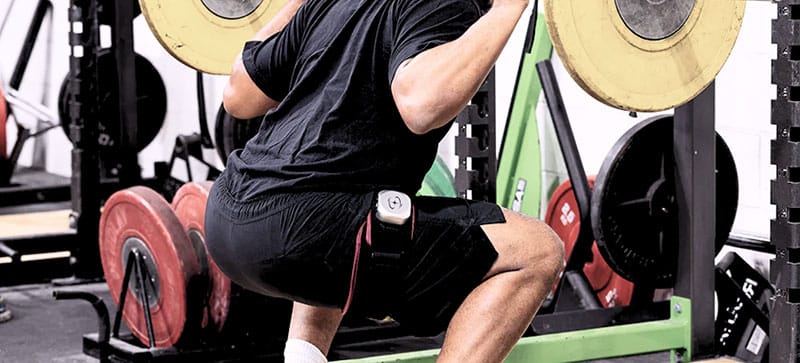
If you’re active, train consistently, and hate losing progress when something flares up, Blood Flow Restriction (BFR) training is one of the most effective ways to stay strong without overloading your body.
Whether you’re dealing with a nagging injury, joint irritation, or just a phase where heavy
lifting isn’t an option, BFR allows you to maintain and even build muscle using lighter loads—
without taking steps backward
What is Blood Flow Restriction (BFR) Training?
Blood Flow Restriction training involves placing a specialized cuff or band around your
upper arm or leg to partially restrict venous blood flow (blood leaving the muscle) while
allowing arterial flow (blood entering).
This creates a low-oxygen (hypoxic) environment, making your muscles work harder—even with light weights.
Typical BFR Setup:
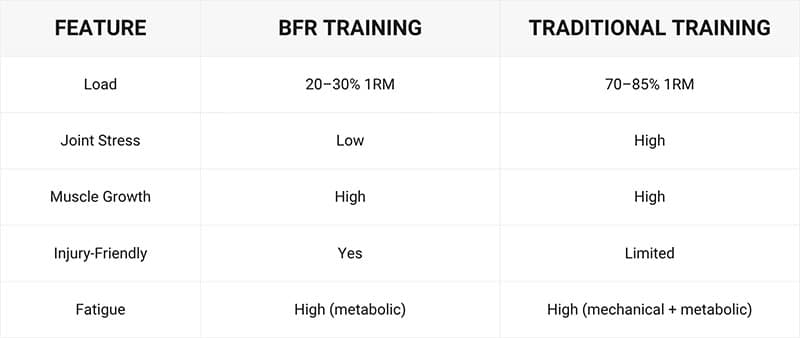
- Load: 20–30% of your 1-rep max
- Reps: High (15–30 reps per set)
- Rest: Short (30–45 seconds)
- Intensity: High muscle fatigue
The Science Behind BFR Training
BFR isn’t just a trend—it’s backed by strong research in sports performance and
rehabilitation science.
1. Early Fast-Twitch Muscle Recruitment
Under normal conditions, heavy loads are needed to recruit fast-twitch fibers.
With BFR, restricted oxygen forces your body to activate these high-threshold fibers earlier,
even at low loads.
2. Increased Muscle Growth Signals
BFR significantly increases:
- Growth Hormone (GH)
- Insulin-like Growth Factor-1 (IGF-1)
These hormones support muscle repair, regeneration, and hypertrophy.
3. Metabolic Stress = Muscle Adaptation
The intense “burn” you feel is due to metabolite buildup (like lactate), which drives muscle
growth and strength adaptations.
4. Comparable Hypertrophy to Heavy Training
Multiple studies show that:
- Low-load BFR (20–30% 1RM)
can produce similar muscle growth as - Traditional high-load training (70–85% 1RM)
This makes BFR a powerful tool when heavy loading isn’t possible.
Benefits of BFR Training for Active Adults and Athletes
Maintain Strength During Injury Recovery
If pain or injury limits heavy lifting, BFR allows you to preserve muscle mass and strength
without stressing healing tissues.
Reduce Joint and Tendon Load
Lower loads mean less strain on joints, making it ideal for:
- Knee pain
- Shoulder irritation
- Tendon overload
Train Around Pain Without Stopping
Instead of shutting everything down, BFR lets you keep training productively.
Accelerate Return to Sport
BFR helps bridge the gap between:
- Early rehab
- Full performance training
Improve Muscle Endurance and Capacity
High-rep BFR work improves local muscular endurance and tissue tolerance, reducing
future injury risk.
When Should You Use BFR Training?
BFR is most effective when strategically applied.
Use it during:
- Injury recovery phases
- Post-surgery rehab (under supervision)
- Deload weeks
- Travel or limited equipment situations
- Periods of joint irritation or fatigue
What Does BFR Training Feel Like?
BFR feels different than traditional training—and that’s the point.
- Rapid muscle fatigue
- Intense muscle “burn”
- Significant pump with light weights
Even though the load is light, the internal intensity is high, which drives adaptation.
Is Blood Flow Restriction Training Safe?
Yes—when done correctly.
BFR is widely used in physical therapy clinics, sports performance settings, and
professional athletics.
Safety Guidelines:
- Use proper, medical-grade cuffs
- Apply individualized pressure (not guesswork)
- Avoid excessively tight wrapping
- Screen for contraindications (vascular conditions, clotting history, etc.)
Working with a trained professional ensures safe and effective application.
BFR Training vs Traditional Strength Training
Why BFR Training Matters for Long-Term Performance
The biggest setback for active people isn’t just pain—it’s inconsistency.
Every time you stop training:
- Strength declines
- Capacity drops
- Injury risk increases when you return
Mstrong>BFR helps you stay consistent, even when your body isn’t tolerating heavy loads.
That consistency is what drives:
- Long-term strength
- Resilience
- Performance longevity
Key Takeaways
- BFR training allows you to build muscle and strength with light weights
- It’s supported by strong research in rehabilitation and performance science
- Ideal for injury recovery, joint pain, and deload phases
- Helps active individuals maintain progress without setbacks
Ready to Train Without Losing Progress?
If something is limiting your ability to train the way you want, you don’t have to stop—you
just need a smarter approach.
BFR training is one of the most effective ways to:
- Stay strong
- Protect your joints
- Keep moving forward
Train smart. Stay consistent. Redefine what’s possible.
Need Help Now?
At R3 Athletic & Physical Therapy, we specialize in helping active individuals recover faster and stay injury-free—without relying on medications or surgery.
We offer a FREE Discovery Visit to help you figure out what’s going on, why it’s happening, and what you can do about it.
 Book your free visit today and take the first step toward a pain-free future.