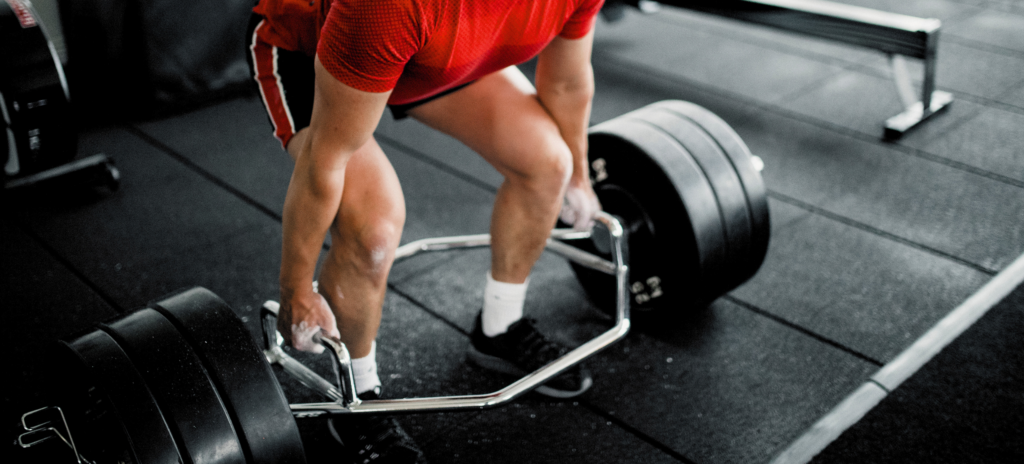
You lift. You run. You train. And then mid-deadlift, halfway through a tempo run, somewhere between box jumps and rope climbs, something goes wrong.
Not because you are weak. Not because you pushed too hard. Because there is a difference between being strong and being resilient. And most training programs build the first without ever addressing the second.
Here is what is actually going on, and how to close the gap.
The Myth of “Just Get Stronger”
The fitness world has a simple answer for injury prevention: get stronger. More muscle, more armor. Bullet-proof your body.
There is truth in that. Resistance training is genuinely one of the most evidence-backed interventions for reducing injury risk for runners, team sport athletes, CrossFit athletes, and aging adults alike. Stronger glutes protect knees. Stronger posterior chain protects lumbar discs. Stronger rotator cuff musculature protects the shoulder.
But strength alone does not explain why the guy squatting 400 pounds blows out his knee, or why the marathon runner with a disciplined training log still ends up with a stress fracture.
What is missing is this: load capacity.
Your muscles, tendons, bones, and fascia each have a capacity a ceiling for how much mechanical stress they can absorb before they break down rather than adapt. When training load outpaces tissue capacity, injury is not bad luck. It is math.
What Tissues Actually Need to Stay Healthy
Different tissues adapt at different rates. Muscle tissue responds relatively quickly to training stimulus. You can build meaningful strength in four to six weeks of consistent loading.
Tendons and cartilage are a different story. They are less vascular, less metabolically active, and far slower to adapt. A tendon might lag six to twelve weeks behind the muscles pulling on it.
This is why athletes who train hard and progress quickly are disproportionately at risk. The muscles get stronger. The tendons do not keep up. At some threshold, the tendon starts absorbing load it was never prepared for and that is where Achilles tendinopathy, patellar tendinopathy, proximal hamstring issues, and rotator cuff problems actually come from.
The fix is not rest. Rest just takes the tendon back to baseline. The fix is progressive, targeted loading the kind that specifically stimulates tendon adaptation without creating more damage than the tissue can repair.
This is a large part of what we do at R3 Athletic. Not just treating the injury that showed up, but asking why the tissue could not handle the load and building a program that changes that.
The Mobility Trap
Here is another one that trips people up: mobility.
If you are tight somewhere, the assumption is that stretching will fix it and then you will be injury-proof. This is mostly wrong.
Most “tightness” is not a length problem. It is a stability and motor control problem. Your nervous system is restricting range of motion because it does not trust what happens at end range. It is not your hip flexor being short. It is your hip not having the strength or coordination to control that position.
This is why stretching alone does not prevent injuries. You can be the most flexible person in your gym and still blow your ACL on a cut, because flexibility without stability is just impressive-looking instability.
What actually helps: strength through range of motion. Loaded hip work. Single-leg training. Eccentric loading patterns that teach the tissue to absorb force, not just produce it.
Your IT band is not “too tight.” Your hip is under-recruiting. Those two things sound similar but lead to entirely different treatment plans.
Where Training and Rehab Need to Speak the Same Language
The gap between training culture and clinical physical therapy has historically been wide. Trainers focus on performance. PT historically focused on pain. And too often, people fell into the middle cleared from PT (“you are pain-free, go back to sport”) before their tissues were actually ready for what sport demands.
We work in that middle. When we discharge someone, the finish line is not “no longer limping.” It is: can you squat your bodyweight? Hop and decelerate on a single leg? Produce and absorb force at the speeds your sport or activity actually requires? Ultimately, are you confident your body can handle anything you throw at it? A resilient body.
That requires knowing what your sport actually requires. We speak the language of training blocks, race calendars, and competition seasons, not just functional movement screens.
If you train with a coach or are part of a program, we coordinate directly with them when it helps. Rehab and training do not need to be separate tracks. They work better as one.
When Loading Is Not Enough: Regenerative Tools for Stubborn Tissue
Sometimes especially in tendons that have been overloaded for months or years the tissue has lost its structural integrity. The collagen is disorganized. The healing response has stalled. Progressive loading is still the foundation, but it needs backup.
This is where regenerative therapies like shockwave and EMTT (Extracorporeal Magnetotransduction Therapy) become relevant.
Shockwave therapy delivers acoustic pressure waves into tissue to stimulate the cellular repair process, increase blood flow, and break down calcific deposits. EMTT uses high-energy electromagnetic pulses to promote tissue regeneration at the cellular level. Neither one is a shortcut, and neither replaces structured loading. But for tendons and chronic soft-tissue problems that have not responded to standard PT, these tools change what is possible.
If your patellar tendon has been unhappy for two years, your plantar fascia has been a topic of conversation for longer than you would like to admit, or your Achilles has been “almost better” for an entire training cycle there is a reason it has not resolved. And there is likely a path forward that does not involve another cortisone shot and a wait-and-see.
The Actual Checklist for Keeping Strong People Healthy
A few things we look at when a hard-training adult walks through our door:
Load history. How fast did training volume or intensity go up in the weeks before the problem started? Rapid increases are the most consistent predictor of overuse injury more reliable than biomechanics, strength imbalances, or any other variable.
Tissue capacity versus demand. Are the tendons actually prepared for what the training is asking them to do? This is not always obvious from strength testing alone.
Movement patterns under fatigue. Plenty of people move well when fresh. Fewer maintain mechanics when tired. Most ACL tears and ankle sprains happen late in games, late in races, or late in a heavy training session. Endurance matters.
Recovery quality. Sleep, nutrition, and stress all affect tissue repair. Not in a wellness-influencer way in a real, cellular adaptation way. If recovery is chronically inadequate, the tissue never fully adapts between sessions.
History of previous injury. Prior injury is the single strongest predictor of future injury at that site. If your left hamstring has been strained twice, it does not just need to be “rehabbed.” It needs to be progressively loaded to a level that makes it more robust than it was before the first strain.
The Bottom Line
Strength training is protective. But being strong is not the same as being resilient and resilience is what keeps you training, competing, and moving well long-term.
If you have been dealing with a recurring issue, if something is “almost better” but never quite gets there, or if you have been told to rest and then gone back to training only to have the same problem return the answer is not more rest, and it is not just different exercises.
It is a real plan. One that accounts for what your tissues need and what your active life demands.
That is what we do at R3 Athletic and Physical Therapy.
Book a free discovery call or reach out directly to talk about what you are dealing with and whether we are the right fit.
R3 Athletic and Physical Therapy is a sports-focused physical therapy practice in Milpitas, CA, specializing in one-on-one care, regenerative therapies, and return-to-performance rehabilitation for active adults and athletes.
Need Help Now?
At R3 Athletic & Physical Therapy, we specialize in helping active individuals recover faster and stay injury-free—without relying on medications or surgery.
We offer a FREE Discovery Visit to help you figure out what’s going on, why it’s happening, and what you can do about it.
 Book your free visit today and take the first step toward a pain-free future.