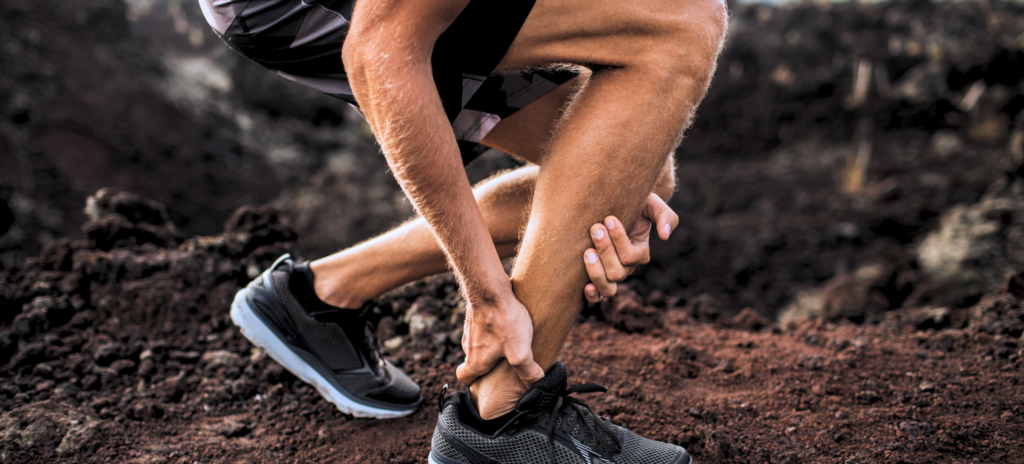
It starts as a little stiffness in the morning. You shake it off, warm up through it, and convince yourself it is nothing. Then it is not nothing. Then you are Googling “Achilles tendinopathy” at 11pm and learning more about collagen fiber structure than you ever wanted to know.
Achilles tendinopathy is one of the most common overuse injuries in runners, cyclists, and active adults, and it is also one of the most reliably mismanaged. Not because people do not care, but because the standard advice, rest it, ice it, stretch it, strengthen it, does not always work. And when it does not, people end up in a cycle of partial recovery, too-early return, re-flare, and frustration.
Here is what is actually going on, and how we approach it at R3 Athletic and Physical Therapy in Milpitas, CA.
What Is Achilles Tendinopathy (And Why "Tendinitis" Is the Wrong Word)
For years, Achilles pain was called tendinitis, implying active inflammation. But imaging and research over the past two decades have shifted the picture. What most chronic sufferers have is tendinopathy, a degenerative change in the tendon’s collagen structure from repetitive overload without adequate recovery.
This distinction matters because it changes the treatment. Anti-inflammatories and complete rest, the tendinitis playbook, do not repair a tendon that has lost structural integrity. In fact, too much rest can make tendinopathy worse by depriving the tendon of the mechanical stimulation it needs to reorganize and heal. The research is clear: tendons respond to load, not the absence of it. The goal is not to stop moving; it is to move the right amount.
Why Achilles Tendinopathy Is So Stubborn
The Achilles tendon is the thickest tendon in the body. It handles forces up to 10 times your body weight during running and jumping. That is a lot of demand for a structure with relatively poor blood supply compared to muscle tissue.
Poor blood supply means slower healing. It also means that once the tendon’s internal architecture gets disrupted, the repair process is slow and incomplete unless it is supported correctly. You can feel fine with calf raises and an easy jog and then push into cutting, jumping, and sports that sets you back weeks. That is not bad luck. That is the tendon’s capacity being exceeded before the tissue has actually caught up to where you want to be.
The other culprit is load management. Most don’t understand what is too little or too much activity on the Achilles. Too little, no positive adaptations occur. Too much, increased pain and irritation causes a setback.
How We Actually Treat It At R3
We start with a thorough movement assessment: how you load your ankle and calf complex under demand, what is happening at the hip and knee that might be feeding excess stress down the chain, and where in the tendon the pathology lives. Midportion tendinopathy and insertional tendinopathy are different animals that require different loading protocols.
From there, treatment is built around heavy slow resistance training for the calf and Achilles complex. The evidence base on this is solid. Tendons adapt to tension, and progressive eccentric and isometric loading programs, done consistently and at the right intensity, drive collagen remodeling and rebuild the tendon’s capacity. Getting the dosing correct, just like medications, is essential here to get the proper stimulation and adaptation. Generic 3x 30-45 second holds or 3×10 heel raises often don’t work here. They much be specific to your current tendon health and state.
Manual therapy addresses joint mobility at the ankle, calf mobility, and any contributing restrictions up and down the chain. We also look at footwear, surface, and training volume with the same attention a good coach would.
The Game Changer: Shockwave Therapy and EMTT
For chronic Achilles tendinopathy, especially cases that have been grinding along for months or have not responded adequately to a well-executed loading program, we bring in regenerative therapies.
Shockwave Therapy (extracorporeal shockwave, or ESWT) delivers high-energy acoustic waves directly to the tendon. This does several things: it stimulates neovascularization, meaning new blood vessel formation that improves the tendon’s nutrient supply; it disrupts calcific deposits; and it kick-starts a cellular healing response that essentially tells the tendon to start repairing itself in a more organized way. For stubborn insertional Achilles tendinopathy in particular, shockwave has a strong evidence base and typically produces meaningful improvement in cases where traditional PT alone has stalled.
EMTT, or Extracorporeal Magnetotransduction Therapy, is newer but compelling. It uses high-energy magnetic fields to influence cellular behavior at the tissue level, promoting regeneration in tendons, ligaments, and bone. We use it alongside shockwave to maximize tissue regeneration and enhance our results. Together, these tools extend what we can offer athletes and active adults who need more than exercise alone.
Neither of these is a quick fix. They work best when layered into a structured rehab program, not used in isolation. But for the right patient at the right stage, they can meaningfully accelerate the timeline and improve outcomes.
What the Recovery Timeline Actually Looks Like
Honest answer: Achilles tendinopathy takes time. Mild to moderate cases typically see significant progress in 8 to 12 weeks with consistent, well-loaded rehab. Chronic cases, especially those with degenerative changes visible on imaging, often take longer. That is not a failure of effort; it is biology.
The good news is that you do not have to be completely sidelined for most of that. With smart load management, most people can maintain a modified version of their training while the tendon heals. We work around your race calendar, your competitive season, and your actual life, not a theoretical return-to-sport protocol written for a generic patient. Bay Area athletes training for fall marathons, trail races, or just trying to stay competitive into their 40s and 50s are exactly who we built this practice for.
The goal is not just to get you pain-free. It is to get you back to full capacity, with a tendon that can handle what you actually want to do, and a clearer picture of how to manage load so this does not keep coming back every training cycle.
Ready to Stop Guessing?
If your Achilles has been limiting you for more than a few weeks, or you have been through the standard rest-and-ice cycle more times than you can count, it is time to get an actual assessment. We offer a free discovery session with a licensed Doctor of Physical Therapy so you can talk through what is going on and get a plan before committing to anything.
Book a free discovery call with R3 Athletic and Physical Therapy!
You have a race, a season, or a trail that is waiting on you. Let us figure out what is actually holding you back.
R3 Athletic and Physical Therapy is a sports-focused physical therapy practice in Milpitas, CA, offering one-on-one care, hands-on treatment, and the gold standard in regenerative therapies, including shockwave and EMTT, for athletes and active adults who want to get back to and beyond what matters to them.
Need Help Now?
At R3 Athletic & Physical Therapy, we specialize in helping active individuals recover faster and stay injury-free—without relying on medications or surgery.
We offer a FREE Discovery Visit to help you figure out what’s going on, why it’s happening, and what you can do about it.
 Book your free visit today and take the first step toward a pain-free future.